
Why Singapore Kids Are Anxious (And What's Actually Helping)
The observation nobody needs confirming
It's not one or two kids. It's most of them.
You see it at the playground — kids comparing test scores instead of playing. You hear it at dinner — a child calculating whether they'll get into the right secondary school and what that means for their life trajectory. They're 11 years old. You see it in your own child: the stomach ache before exams, the perfectionism about a small assignment, the fear that one bad test means everything's broken.
It's not new. But it's gotten louder. And it's worth naming what's actually driving it.
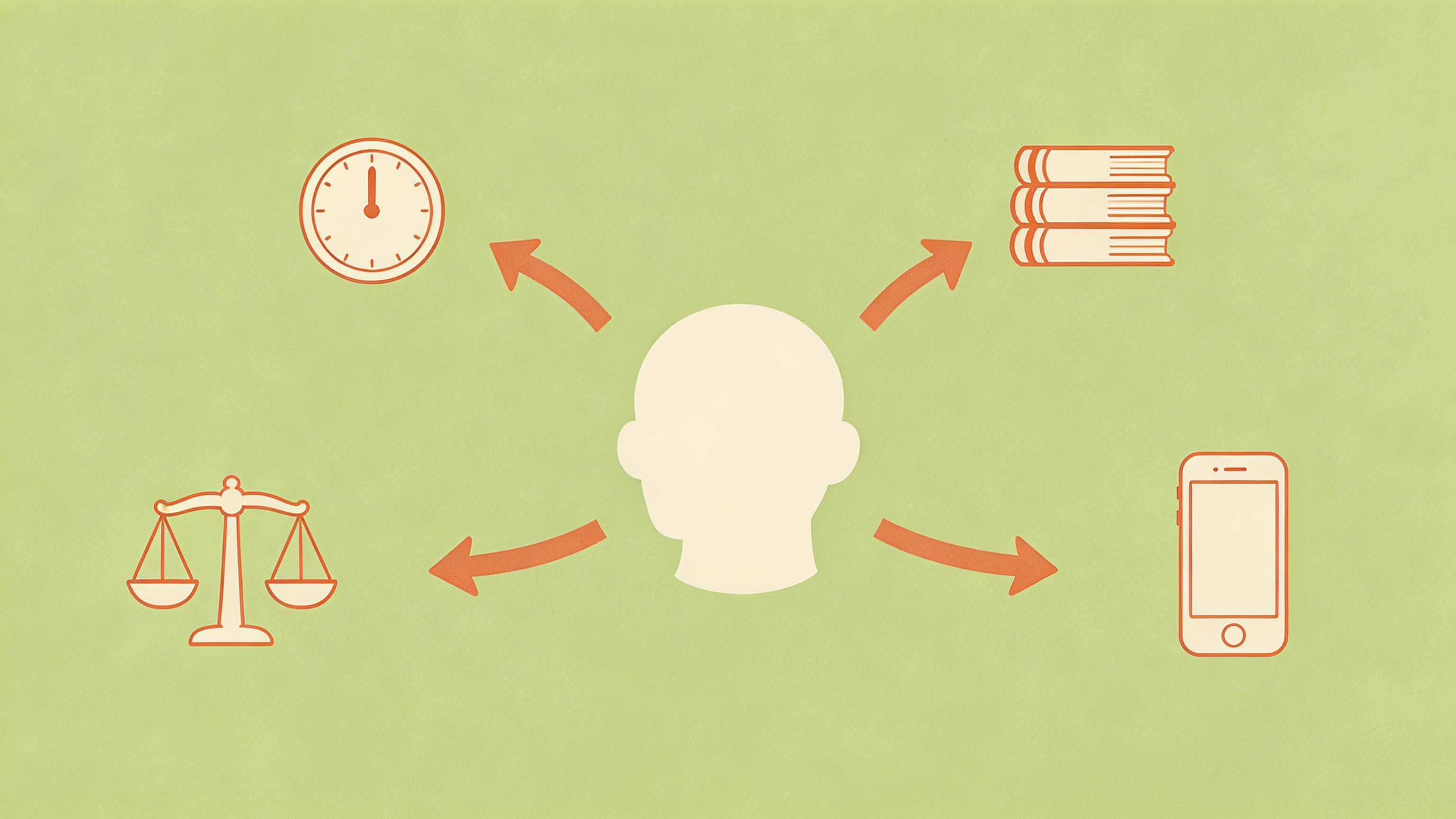
What's actually making kids anxious
Academic pressure is the obvious one, but it's not the only one.
In Singapore, school performance maps directly to your future. Not metaphorically. The exam rankings determine which school you go to, which shapes your peer group, which shapes your options, which shapes your life trajectory. By age 10, most Singapore kids understand this implicitly. They might not say it in those words. But they feel it.
PSLE is the pressure point everyone sees. But the anxiety doesn't start there. It starts in Primary 3 when they first understand that there's a hierarchy. It intensifies in Primary 4. By Primary 5, it's just ambient.
Social comparison is the second driver.
Singapore is a country obsessed with metrics. Test scores are public (your child knows how they rank against their friends). Class rankings are public. Ranking by school is almost public. Your child's performance is constantly measured against their peers' performance.
Some kids thrive on this. Many don't. Many feel like they're failing even when they're doing well, because someone they know is doing better. And because the definition of "good" keeps moving.
Packed schedules are the third.
The average Singapore kid in Primary 4-6 has school, then tuition, then enrichment, then homework until 9 or 10 PM. There's no unstructured time to decompress. No time to just sit and be bored, or play without an agenda, or read a comic book without guilt.
Your child's body is running on adrenaline and cortisol from age 8 onwards. Then we're surprised they're anxious.
The fourth one nobody talks about: parental anxiety.
Kids absorb it like a sponge. If you're worried about their school performance, they know. If you're stressed about whether they're doing well enough, they feel it. If you're comparing your child to other people's children, your child is doing it too. Often louder.
Your anxiety about their future becomes their anxiety about their present.
What doesn't help (even though we try it)
More reassurance doesn't work. Telling an anxious child "you're fine, you'll be fine" is like telling someone who's drowning that the water's not deep. It doesn't match what they're experiencing. They feel anxious, so reassurance sounds like you're not listening.
More activities doesn't work. The solution to "my child is stressed" is not "sign them up for something they're interested in!" It's removing something they're not. One more thing on the schedule is one more thing to manage.
Comparing them to other kids doesn't work — even when it's meant to comfort them ("look, that kid only got 70 too"). It either reinforces the comparison (why are we measuring this?) or makes them feel like their anxiety is invalid.
Pushing them harder doesn't work. If your child is anxious about their studies, the solution isn't "focus more" or "study harder." Something is already broken in their relationship with achievement.
Minimizing their worries doesn't work. "It's just one test" or "you're overthinking it" tells them their internal experience is wrong. They're not going to feel better; they're just going to feel unheard.
What actually helps (what parents report)
Unstructured time. Kids need time to decompress that has no agenda. Not "free play time" with enrichment goals. Actually free. Bored time. Time they can waste. Time they don't have to optimize.
Even 30 minutes a day of nothing structured makes a measurable difference. Weekends without tuition or activities. A night with no homework (or permission to skip it).
Acknowledging without fixing. When your child says "I'm worried I'll fail the test," the instinct is to fix it: "you won't fail," "let's study more," "here's how to manage your anxiety." Sometimes what they need is: "That sounds scary. I believe you're scared. What would help right now?"
Acknowledge the feeling first. Fix it second.
Reframing failure. Most anxious kids have learned that failure is the worst outcome. So they become perfectionists to avoid it. But a lot of anxiety comes from the impossibility of that standard.
When your child makes a mistake or doesn't get the grade they wanted, the message that matters is: "This is information, not a verdict. This tells us what to work on next. It doesn't mean anything about you."
They learn that failure is a data point, not a judgment. Slowly, the anxiety eases.
Giving them back control over small things. Anxious kids often feel like their whole life is scheduled and measured by adults. One small way to reduce that is: "You pick what time you do homework today," or "You decide what you want for dinner," or "You choose which book we read tonight."
It's not about the decision. It's about the sense that they have some agency over their own day.
Protecting them from the pressure to be exceptional. This is the hardest one for Singapore parents. But kids who are allowed to be average — who don't feel like they have to rank highly, excel at everything, or prove their worth through achievement — are measurably less anxious.
Your child doesn't need to be the best at school. They need to feel like they're enough.
When to get help
If your child's anxiety is affecting their sleep, eating, or social life significantly, or if it's not improving with these changes, talk to a child psychologist. Anxiety is treatable. You don't have to wait until it's a crisis.
The reframe
We talk about Singapore kids' anxiety like it's their problem to fix. Like they're weak or dramatic or "too sensitive for school."
Actually: they're responding normally to an abnormally pressured environment. The anxiety isn't the problem. The pressure is.
The kids doing well with reduced anxiety often have parents who've decided: my child's wellbeing matters more than their rank. Some kids will still feel the pressure anyway. But when they know their parents aren't adding to it, it gets easier to breathe.
Start small. One afternoon off tuition. One evening without talking about school performance. One time you acknowledge your child's worry without immediately trying to fix it.
Your child's anxiety isn't a reflection on you. But your calmness — your confidence that they're okay, that failure isn't catastrophic, that their worth isn't their grades — that does help. More than any amount of reassurance.
Related reading
- building resilience in kids (same-pillar)
- exam season survival guide (same-pillar)
- personalised affirmations using AI (cross-pillar)