How I Used AI to Help Me Find Ripe Mangoes at the Market
The scene
Saturday morning at the market. Mango season. The stall owner has about 200 mangoes in different stages of ripeness. I want the ones that are ripe today, not the ones that will be ripe in three days. I hate returning to the market.
I stood there picking them up, squeezing gently (too hard and you bruise them), looking at the color (is that yellow enough?), smelling them (does it smell like mango?), and basically guessing.
Then I thought: why don't I just ask.
The question
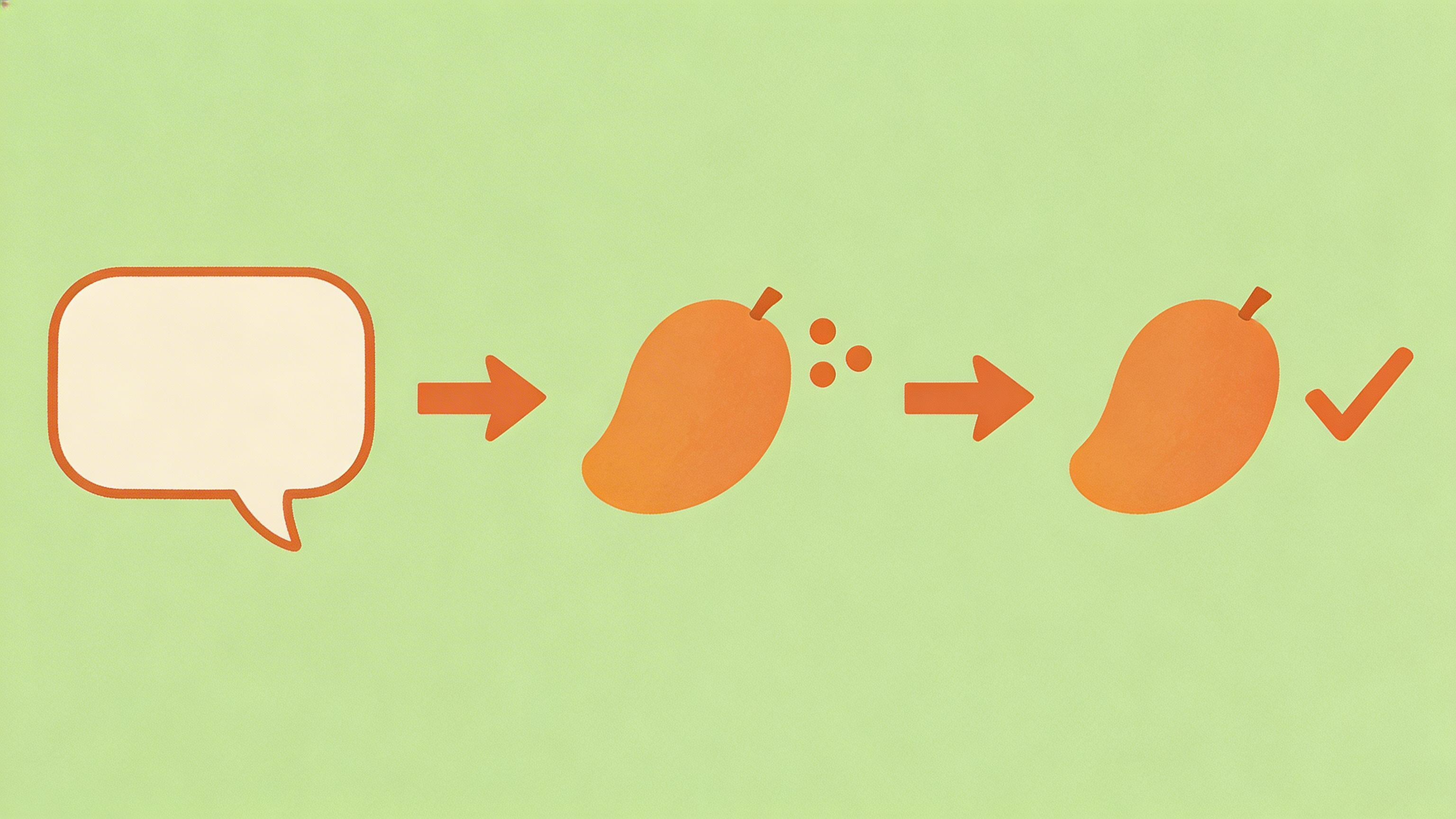
I opened Claude and typed: "How do I tell if a mango is ripe just by looking at it and touching it? I'm at the market right now and they have a mix of ripeness levels. I want ones that are perfect to eat today or tomorrow."
What came back:
Colour: Ripe mangoes have a background yellow or orange colour — but here's the thing, some varieties stay green even when ripe. If you're not sure what type, look for that transition from pure green to a warmer tone.
Feel: Gentle pressure on the mango should give a tiny bit. Not squishy. Not rock-hard. Imagine the give of a ripe avocado — similar.
Smell: The stem end (where it connects to the branch) should have a sweet, distinct mango smell if it's ripe. If there's no smell, it's not ready. If it smells fermented, it's overripe.
Specific test: If you can gently squeeze it and feel the tiniest flex without your fingers sinking in, it's probably ready.
I went back to the stall with this information in my head. Suddenly I could actually tell the difference. I picked eight mangoes. All of them were perfect. All of them got eaten within 36 hours. No waste.
The reframe
Here's what struck me afterward: I had a question. A totally normal, practical, "too small to Google" question. And instead of squinting at the mangoes and hoping, I asked an AI.
It gave me a real answer. Not a recipe. Not a life hack. Just: here's how to tell.
And it made me think about all the other small things I wonder about and don't ask anyone:
- Is this mould on my cheese okay? (Is it safe to cut it off or should I throw the whole thing out?)
- Why is my child doing this weird thing? (Is it normal or should I be worried?)
- How do I know if my plant is actually dying or just looks sad?
- What should I look for if I'm buying a secondhand [item]?
- Is this stain coming out or is it permanent?
- How long can I realistically store this?
- Why does my child's friend do that thing? (Normal developmental stage or something to discuss with their parent?)
These are all things we used to ask an older relative who knew about life. Or we'd figure it out through trial and error. Or we'd just go without knowing.
Now we can ask.
The actual usefulness
ChatGPT or Claude (or any AI chatbot) is like having a knowledgeable, infinitely patient friend in your pocket who's okay with small questions.
You're not bothering them. You're not googling and getting a Reddit thread from 2013. You're not calling your mum because the question feels too small. You're just asking.
And you get a real answer in 30 seconds.
Some examples people have told me about: - "How do I know if my kid's fever is high enough to worry about?" - "What should I ask the electrician so they don't rip me off?" - "Is this normal baby poop or should I be concerned?" - "How do I tell if my child's friend is being mean or just joking?" - "What's the actual difference between these two types of fabric?" (Relevant: if you're buying clothes for your kid, knowing the difference between bamboo viscose and regular cotton matters.)
None of these are emergencies. All of them are things you actually want to know. And they're all things that are just... easier to ask an AI than to navigate yourself.
The caveat
AI isn't a doctor. It's not a substitute for professional help. If your child has a fever and you're genuinely worried, you call the doctor, not Claude.
But for the stuff that's 80% "I wonder" and 20% "I'm actually concerned"? For the normal stuff that just needs a clear explanation? For the sensory questions — how does this work, what should this feel like, what's normal here? — AI is really good.
Why this matters
There's something specific about having a tool that answers small questions without judgment.
Most of parenting is small questions. Is this normal? What should I look for? How do I know if I'm doing this right? When should I actually worry?
These questions are too small to call someone about. They're too specific to Google easily. You end up either not asking, or asking and getting a million conflicting answers, or asking your parents and spending 20 minutes on a question that could've been three minutes with AI.
A knowledgeable friend — patient, available, clear — that's the thing most parents are missing.
Start with something small
Next time you're at the market, or in the kitchen, or watching your kid do something weird, or looking at something and wondering if it's okay — ask.
Open ChatGPT or Claude. Ask the question exactly as you'd ask a friend. See what comes back.
You'll probably be surprised how useful it is to have an answer instead of just guessing.
Related reading
- AI meal planning for families (same-pillar)
- family recipe book using AI (same-pillar)
- what my kid taught me about learning (cross-pillar)