
How to Use AI as a Patient Tutor for Your Child
It's 7pm and you've explained the maths problem four times. Your child still doesn't get it. You're frustrated. They're frustrated. Nobody's learning anymore — you're just repeating.
This is where AI becomes genuinely useful.
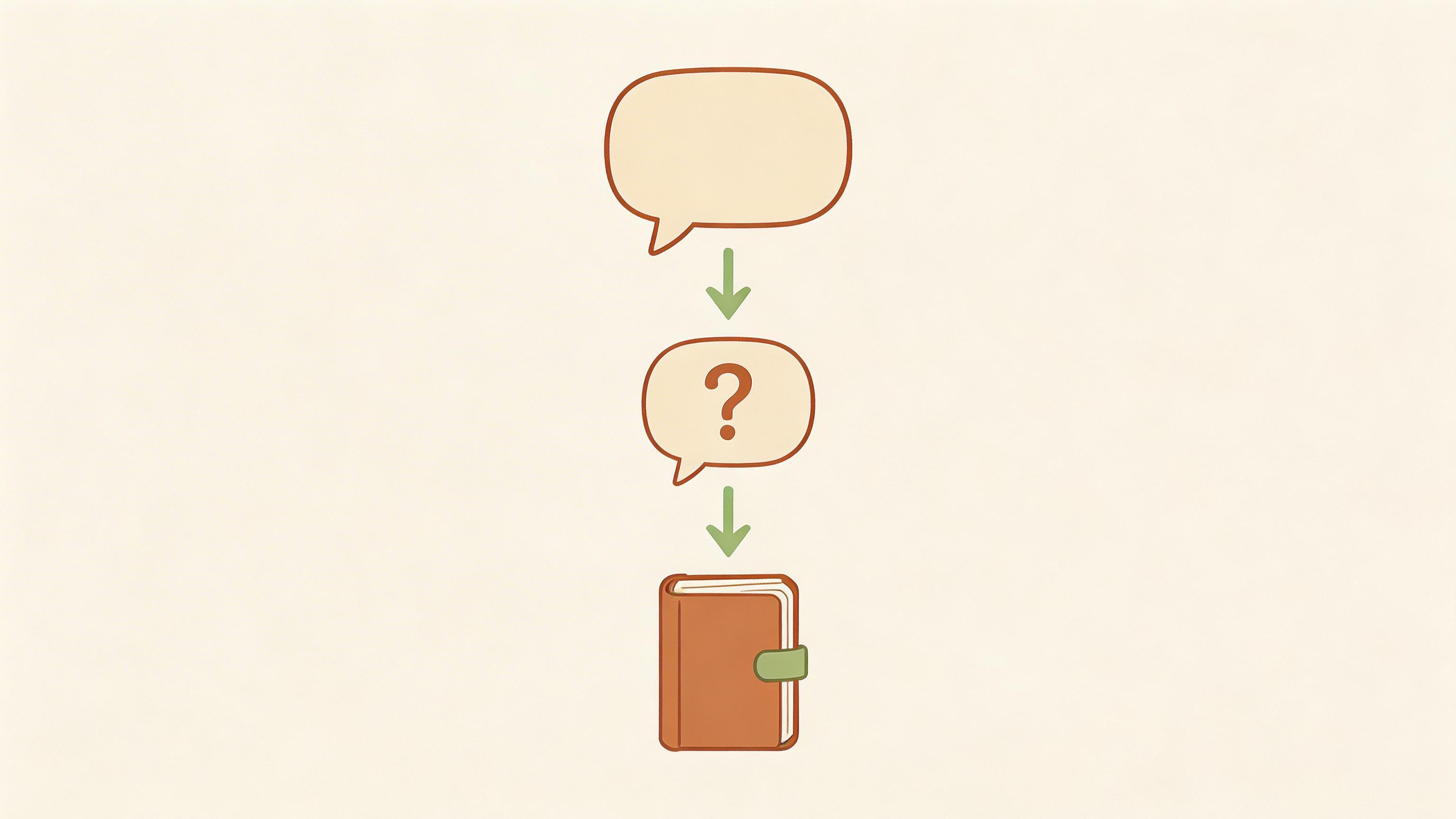
The trick is not to use AI as an answer machine. That's passive. That's homework-dodging. Instead, use it as a Socratic tutor — a guide that asks questions, lets your child figure it out, and never just hands over the solution.
What Socratic AI tutoring actually looks like
Socratic tutoring works by asking questions instead of giving answers. The tutor guides the student's thinking rather than feeding them information.
With AI, you can do this at scale. You set the framework, and the AI responds with carefully-calibrated questions that nudge your child toward understanding.
Here's the difference:
Non-Socratic (passive): - Child: "What's 24 ÷ 4?" - AI: "The answer is 6." - Result: Child learns nothing.
Socratic (active): - Child: "I don't understand 24 ÷ 4." - AI: "Okay. If you have 24 sweets and you share them equally among 4 friends, how many does each friend get? Think about how many groups of 4 are in 24." - Child: "Umm... four groups?" - AI: "Good. How many sweets in each group?" - Child: "Oh — 6!" - Result: Child understands division.
The second one takes longer. It's also worth every second.
How to set this up (with exact prompts)
Open ChatGPT, Claude, or any AI chatbot. Give it this instruction at the start of the session:
You are a patient tutor for a [child's age]-year-old. Your job is:
1. Never give direct answers to homework or learning questions.
2. Ask guiding questions that help them think through the problem.
3. Celebrate when they figure something out.
4. If they're stuck after 2-3 questions, give a small hint, then ask again.
5. Keep explanations short and simple.

The topic we're learning about is: [maths/science/language/history/whatever]
Then your child asks their question. The AI responds with questions, not answers.
For a maths problem: - "What do you already know about this type of problem?" - "Can you draw it or imagine it?" - "What would happen if we tried...?"
For a language question: - "What does that word sound like? Any other words similar to it?" - "Try reading it in context. What do you think it means?" - "Can you make a sentence with it?"
For a science concept: - "What happens when we change [variable]?" - "Have you seen this happen in real life?" - "Why do you think that happens?"
The key: the child is doing the thinking. AI is the question-asker, not the answer-giver.
Keeping it active, not passive
Here's where most parents go wrong. They think using AI = screen time = passive consumption.
Not true. Active learning looks like effort. It's work. Your child should leave a tutoring session tired, not dazed.
Red flags for passive use: - Child is reading AI's answers and just copying them. - Child is asking AI to do their work. - Child is not speaking, writing, or explaining anything.
Green flags for active use: - Child is talking through their thinking. - Child is trying things, failing, and trying differently. - Child is asking follow-up questions. - Child leaves the session able to explain what they learned.
Spend the first week just watching. Let your child ask AI a question. See how they interact with it. Are they engaged or just copying?
If they're copying, pause. Reset the prompt. Make it clearer that AI is here to guide, not to do the work.
Why this works better than a tutor
Tutors cost time and money. They're often not available when your child needs help — 9pm before an exam, or that random Tuesday when something just clicks.
An AI tutor is available now. It's infinitely patient. It won't get annoyed if your child asks the same question three times.
But here's the bigger win: your child learns how to ask good questions.
When they realise that AI doesn't give answers — that they have to ask more specific questions to get useful guidance — something shifts. They become more thoughtful. More metacognitive. They start understanding their own thinking.
That skill transfers everywhere. Not just to schoolwork. To problem-solving. To independence.
Set boundaries
That said, you're still the parent.
Time-limit it. "20 minutes of AI tutoring, then we read together" is reasonable. All-evening AI use is not.
Know what they're learning. Check in. Ask them: "What did you figure out today?" If they can't explain it, they didn't learn it.
And be clear: AI is for learning support, not homework submission. If it feels like cheating, it probably is. You know your kid. You know the difference between "they learned something" and "they bypassed learning."
The goal: curiosity
The real win here isn't a higher test score (though that often happens).
It's that your child starts enjoying the learning process. Because when you're not frustrated, when you have a patient guide, when you figure something out yourself — learning feels good.
That's the mindset shift that matters. Everything else builds from there.
Related reading
- the skills Singapore schools do not teach (same-pillar)
- AI revision without killing the relationship (same-pillar)
- build a simple app with your child (cluster)