
What OEKO-TEX Actually Means (And Why It Matters More Than You Think)
You've seen the label a hundred times: "OEKO-TEX Standard 100 certified." But what does that actually mean? Is it like organic? Is it a safety standard? Or is it just marketing?
The answer: it's real, it's rigorous, and it covers way more than most parents realise—including buttons and zips. But it's not a guarantee that a product is organic or sustainable. It's a safety standard. And understanding the difference between OEKO-TEX and other certifications (like GOTS) will help you decode baby clothing labels with actual confidence.
What OEKO-TEX Standard 100 Actually Certifies
OEKO-TEX is a testing and certification program that checks whether textile products contain harmful substances. It doesn't certify how the fabric was grown or produced—it certifies what's in the final product.
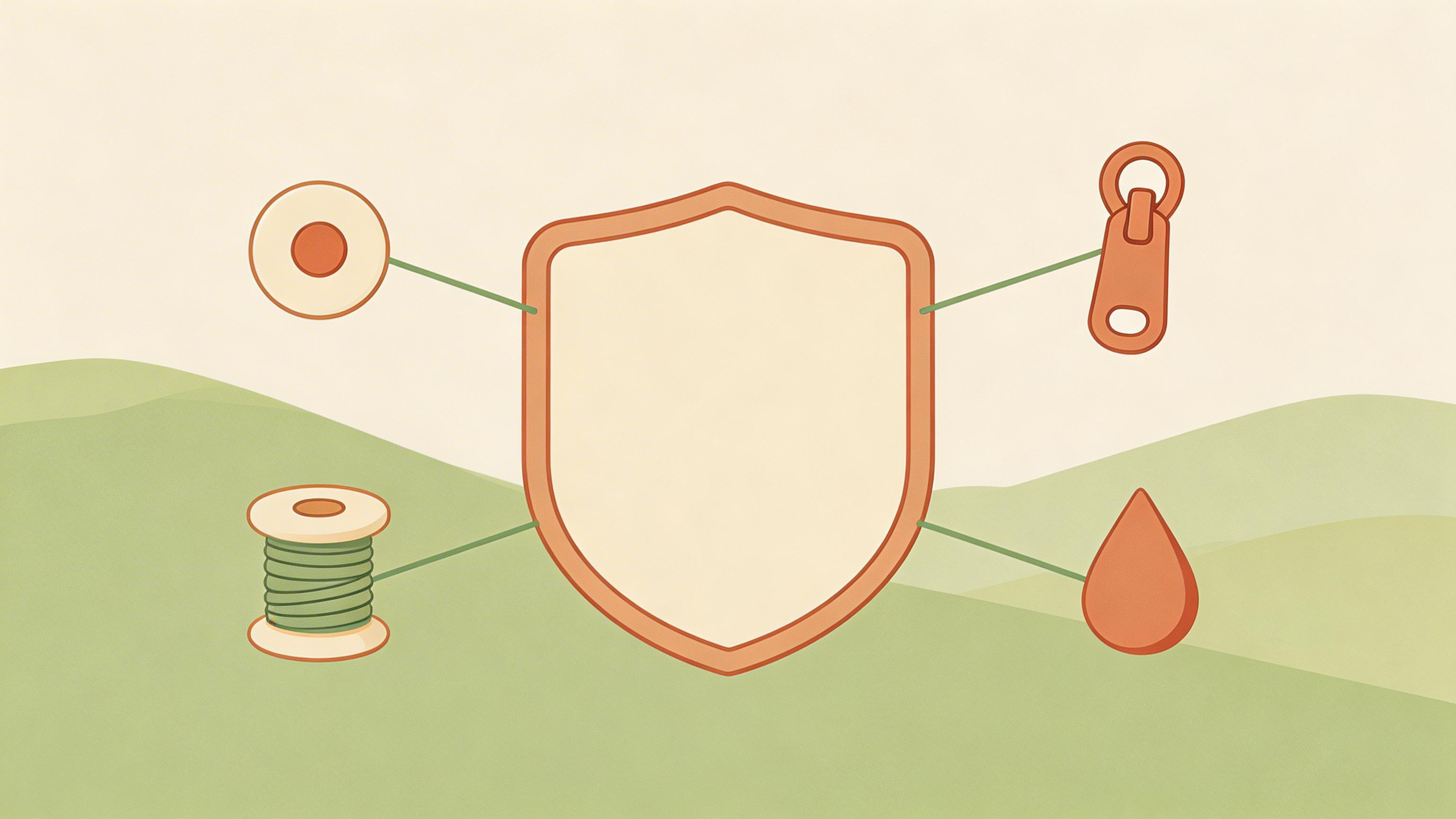
Here's the key detail: it tests every component of the garment. Not just the fabric. Buttons. Zips. Labels. Thread. Elastic. Dyes. Finishes. Everything.
The test checks for over 100 harmful substances—things like heavy metals, pesticides, formaldehyde, phthalates, and flame retardants. If a component contains any of these above certain limits, the garment doesn't get certified.
This is stricter than it sounds. A cotton shirt with a button that contains lead, or zips dyed with carcinogenic dyes, or elastic treated with harmful chemicals? It fails. Full stop.
For baby clothes specifically, the limits are even tighter than for adult clothing. Babies put things in their mouths. They touch fabrics directly against sensitive skin. OEKO-TEX knows this, so the thresholds for harmful substances in baby-category products are lower.
What OEKO-TEX Does NOT Cover
This is important, because it's where people get confused.
OEKO-TEX does NOT certify: - Where the fabric was grown (organic, conventional, regenerative—it doesn't say) - How the factory workers are treated - Whether production methods are sustainable - Whether the dyeing process is eco-friendly - Carbon footprint or water usage
It certifies the final product for harmful substances. That's it.
So an OEKO-TEX shirt could be made from conventionally-grown cotton using water-intensive dyeing processes. It's still certified because the final product is safe for your child to wear. Safe ≠ sustainable.
OEKO-TEX vs. GOTS: What's the Difference?
You'll often see both labels on premium baby clothing. They're different.
| | OEKO-TEX Standard 100 | GOTS (Global Organic Textile Standard) | |---|---|---| | Tests for | Harmful substances in final product | Organic production + safety standards | | Checks | Every component (fabric, buttons, zips, dyes) | Fiber source, processing, labour conditions | | Covers sustainability? | No | Yes, but only if organic certified from the start | | Best for | Assurance the product is safe for skin | Assurance that production was organic + ethical |
Real talk: Most premium baby brands have both. SimplyLife is OEKO-TEX certified because we needed to verify that every single component—95% bamboo viscose fabric, zips, elastic, thread—contains no harmful substances. That's non-negotiable when you're selling to parents.
If a brand is both OEKO-TEX and GOTS, you know the fabric was organically sourced and the final product was tested for harmful substances. That's the highest bar.
How the Certification Works (And Why It's Not Easy to Fake)
OEKO-TEX isn't a brand. It's an independent international association—the International Association for the Textile Ecology. They don't manufacture or sell anything. They test products and issue certificates.
The process: 1. A company submits samples of a finished product. 2. An independent lab tests every component against OEKO-TEX's criteria. 3. The lab publishes results. If the product passes, it gets a certificate. 4. The certificate is issued for one year. Ongoing audits happen annually. 5. If a company wants to claim OEKO-TEX certification, they have to link to the verified certificate number on their marketing.
This is why you can actually verify OEKO-TEX claims. Go to the OEKO-TEX website, enter the certificate number, and you'll see exactly what was tested and what passed. It's traceable.
Can it be faked? Technically yes, but it's rare because the consequences are legal. False claims of certification are fraud. Retailers and brands that sell online in most countries know this.
What This Means for Your Child
A baby wearing OEKO-TEX-certified clothing is wearing something tested for over 100 harmful substances. That's genuinely meaningful when you're talking about something touching your baby's skin 24/7.
Does it mean the garment is indestructible or will last for generations? No. Does it mean the production was kind to the planet? Not necessarily—that's a different certification. Does it mean your baby won't develop eczema or sensitive skin? No, because eczema and sensitivity are complex.
But it does mean: nobody cut corners on the components. Nobody used a cheaper dye that contains heavy metals. Nobody sewed with thread treated with pesticides. The button didn't come from a supplier who was cutting costs by using harmful finishes.
For baby clothing, where skin-to-fabric contact is constant, that matters.
Why OEKO-TEX Matters More Than "Natural" or "Organic" Claims
A brand can slap "natural" on a label with no standard behind it. "Organic" is more regulated, but it usually only refers to the fiber (is the cotton organic?), not the finished product.
OEKO-TEX is specific and testable. You know exactly what was checked. You can verify it. You know it applies to every component.
This is why it's a useful signal of a brand that took the manufacturing seriously—not just marketing. It costs money and time to get certified. You don't do it unless you're genuinely confident in your supply chain.
FAQ
Q: Is OEKO-TEX-certified clothing better than non-certified? A: For safety assurance, yes. If you have no information about a garment's components, you're guessing. OEKO-TEX gives you data. That said, many small artisanal brands don't bother certifying because they're manufacturing on such a small scale that third-party certification costs are prohibitive. The absence of a label doesn't automatically mean the product is unsafe—it might just mean they're bootstrapped.
Q: If something is OEKO-TEX certified, can I ignore other labels? A: Not exactly. If you care about ethical production, you want GOTS. If you care about sustainability, you want certifications that track carbon or water usage. OEKO-TEX tells you the product is safe. Other labels tell you different things.
Q: Does my child need OEKO-TEX-certified clothing? A: If your budget allows, it's a good safeguard. If not, don't feel guilty. Check labels for obvious red flags: strong chemical smells, anything synthetic touching skin directly, unknown suppliers. OEKO-TEX is a higher assurance, not a prerequisite for parenting successfully.
Q: How do I verify an OEKO-TEX certificate? A: Go to OEKO-TEX.com. There's a "Find Certified Products" section. Enter the certificate number (usually listed on the product tag or brand website). You'll see what was tested and what passed.
Q: Is OEKO-TEX better than Bluesign? A: Different standards. Bluesign focuses on eliminating harmful substances during production. OEKO-TEX tests the final product. Ideally, a fabric is Bluesign-certified in production and gets OEKO-TEX certification when finished. SimplyLife focuses on OEKO-TEX because it's the most rigorous for the final product that touches your baby.
Q: What if a brand claims OEKO-TEX but doesn't show a certificate number? A: That's a red flag. Ask for the certificate number. Any legitimate OEKO-TEX certified product should have a unique number you can verify. If they can't provide it, they're either using an outdated certificate or making a false claim.
Related reading
- managing eczema in Singapore humidity (same-pillar)
- bamboo vs TENCEL vs cotton (same-pillar)
- what bamboo clothing actually feels like (same-pillar)