
The Real Reason Kids Don't Listen (It's Not What You Think)
You're standing in the kitchen, your child is playing, and you say: "Go upstairs, wash your hands, come back down in five minutes."
Three minutes later, your child is still playing. Hasn't moved. You repeat it. Louder this time. They look at you blankly. You repeat it again. Now it's a battle.
You think: "They're not listening. They're being defiant. They're ignoring me on purpose."
Here's what's actually happening: they physically cannot process a three-part instruction while their brain is engaged in play. It's not defiance. It's developmental. And understanding this changes everything about how you communicate.
The Actual Reason Kids Don't Listen
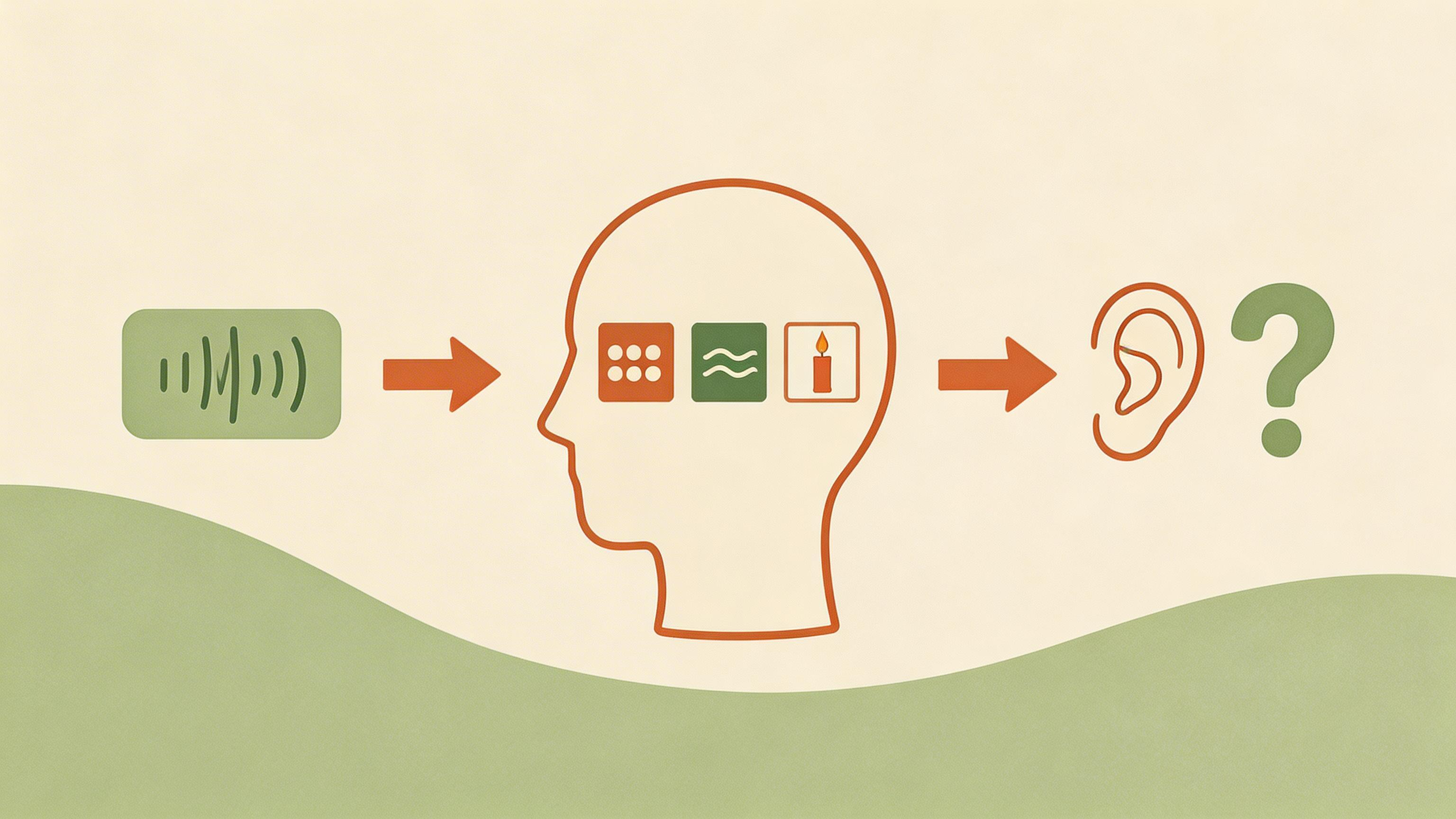
Your child's brain is doing something important while they're playing. All their working memory is dedicated to the game, the toy, the activity. Then you give an instruction.
Your instruction enters their auditory system. It travels to their brain. But there's nowhere to put it—all the working memory is already full.
Imagine you're fully absorbed in a book, and someone gives you a three-digit number and says "remember this." You hear them, but the number doesn't stick because your attention is elsewhere. Your child is doing the same thing.
They didn't choose to ignore you. Their brain literally didn't have space to process and hold the instruction.
Even more: the harder you concentrate on something, the worse you listen to background information. This is called "inattentional deafness." Your child is concentrating well (which is good—focus is a skill), but that concentration has a cost: they're deaf to background instruction.
This isn't laziness. It's how brains work.
Why Your Child Remembers Selectively
You've probably noticed: "I told you not to have juice before dinner" goes in one ear and out the other. But "We're going to the playground," and suddenly they remember. Perfectly. Every word.
This isn't hypocrisy. It's priority.
Your child's brain asks: "Is this interesting? Is this now?"
Playground = interesting, happening now, emotionally significant. Brain encodes it.
Not having juice before dinner = abstract rule about a future time, not immediately relevant, requires impulse control. Brain deprioritises it.
This isn't a failure of listening. It's your child's brain doing exactly what it's designed to do: prioritise immediate, emotionally salient information.
You can't fight this with repetition. Repetition still goes into the low-priority bucket.
Three Things That Actually Work
1. Get their attention first. Actually stop the activity.
This is the real change. Stop saying things to a child who's in play mode. It doesn't work.
Instead: Walk over. Make eye contact. Ask them to pause the activity (not stop permanently—pause). Then give the instruction.
This forces the priority reset. Now you're the immediate, present thing. Now their brain has working memory available.
Kid playing with Lego: "Pause. I need to tell you something." Wait for eye contact. "Go upstairs, wash your hands, come back down." Pause again. "What are you going to do?" Kid repeats it back. Done.
This takes 20 seconds. Repeating an instruction four times and escalating into anger takes five minutes and damages your relationship.
Why this works: You've given their brain a clear signal: stop what you're doing, this is now the priority.
2. One instruction at a time.
"Go upstairs, wash your hands, come back down, put your shoes on" is four instructions. Your child's working memory can hold maybe two, and only if they're connected.
Instead: "Go upstairs and wash your hands." They do it. Then: "Come back down." Then: "Put your shoes on."
This feels slower. It's actually faster, because there's no repeating, no confusion, no need to redirect midway.
Why this works: You're matching the instruction to their actual working memory capacity, not their theoretical capacity.
3. Make instructions concrete and specific.
"Be more careful" doesn't work. "Be organised" doesn't work. Neither does "listen better."
Instead: "Careful means: slow pour so juice doesn't spill." "Organised means: backpack in the cupboard, shoes by the door." "Listening means: eyes on me, then repeat back what I said."
You're giving them a specific behaviour to do, not an abstract idea to embody.
Why this works: Kids don't generalise well yet. They need the concrete version. "Don't run" is abstract. "Keep your feet walking, no faster than a grown-up pace" is concrete.
What Doesn't Work (And Why)
Yelling: Their brain is already in low-priority mode. Yelling just adds stress. It doesn't move the instruction into the high-priority bucket. It makes them defensive.
Repeating the same instruction: Same instruction, same bucket. Your child isn't "getting it" after four repeats—they're tuning you out because you sound like background noise.
Lecturing: "You never listen to me. Every time I tell you something, you ignore me." This is you venting, not communicating. Your child feels blamed. Their brain is now in stress mode, not listening mode.
"Wait until your dad gets home": Threatens the relationship. Confuses cause and effect. Your child learns to fear the parent, not to listen better.
Natural consequences without explanation: "You didn't listen, so no screen time." They learn: parent is punishing me. They don't learn: listening matters, here's why.
The Mindset Shift
Stop thinking: "They won't listen. They're defiant."
Start thinking: "Their brain is full. I need to get their attention first, then give simple, concrete instructions."
The difference: the first one makes you angry. The second one makes you strategic.
When you're strategic, you change your behaviour. You walk over instead of yelling from across the room. You wait for eye contact. You break instructions into pieces. You say "pause" instead of "stop."
Your child hears these changes and responds. Not because you've won a battle, but because their brain now has the resources to actually process what you're saying.
It Gets Better (Sort Of)
By age 7 or 8, kids develop better executive function. They can hold multiple instructions. They can deprioritise play to attend to adult speech. They get better at filtering background noise.
By age 10 or 11, they can handle more complex instructions.
But even teenagers have selective listening—just different priorities. Asking them to do homework instead of play isn't going to magically work. Same strategy applies: pause the activity first, then give the instruction.
What You're Actually Teaching
When you do this well—pause their activity, get their attention, give clear instructions, acknowledge when they do it—you're teaching something more important than listening.
You're teaching: Adults are worth attending to. Relationships matter. Communication is a two-way thing, not me yelling and you obeying.
You're keeping their listening skills intact instead of training them to tune you out. You're teaching them to switch attention intentionally, not resentfully.
And you're teaching yourself to be the kind of communicator your child can actually listen to.
FAQ
Q: But won't this take forever? A: Initially, yes. 20 seconds to get attention, give instruction, confirm. But this becomes faster than repeating an instruction four times, escalating your voice, and then doing it again the next day. Over a week, it saves time overall.
Q: What if my child still refuses after I get their attention? A: That's defiance, not listening. That's different. Consequences are reasonable. But check first: do they understand? "Tell me what I asked you to do." If they can repeat it and still refuse, that's a boundary issue, not a comprehension issue.
Q: Is this babying them? A: No. You're matching their actual cognitive development. As they grow, you add more complexity. A five-year-old needs pause and one instruction. A seven-year-old can do two. A ten-year-old can do more. It's not eternal—it's developmental.
Q: What if they listen to their dad but not to me? A: Different communication styles, or your child has learned that if they ignore you, you'll repeat, but if they ignore their dad, there's an actual consequence. Same strategy applies: pause, get attention, clear instruction. Consistency from both parents matters more than who's saying it.
Q: My child is 14 and still won't listen. A: At 14, this is either a relationship issue or they're genuinely distracted (headphones, gaming, social stress). Address the relationship if it's strained. If they're distracted, same rule applies: pause the activity, get attention. At 14, it might be "Hey, I need to talk to you about something. Can we turn off the game?" They're old enough to understand you need their attention.
Related reading
- school morning routine that works (same-pillar)
- building resilience in kids (same-pillar)
- parenting disagreement with AI (cross-pillar)