
The Exam Season Survival Guide for Singapore Parents
It's September. Your child's PSLE is in a few weeks. And suddenly, parenting doesn't feel like parenting anymore — it feels like you're both on a timer.
The pressure is real. The stakes feel enormous. Your child's teachers are sending home revision notes. Your WhatsApp group is full of anxious parents comparing tutoring schedules. Your child is stressed. You're stressed. Everyone's eating faster and smiling less.
This guide isn't about exam strategy or revision timetables. There are tutors and guidebooks for that. This is about you. Because here's the truth nobody talks about: the single biggest factor in how your child handles exam season is how you handle it.
Your job isn't to help them study harder. Your job is to regulate yourself first, so they can borrow your calmness when theirs runs out.
The Parent's Actual Role in Exam Season
Stop thinking about exam season as your opportunity to finally be involved in your child's education. That's the trap that turns helpful parents into anxious ones.
Your role is three things:
One: Keep life normal at home. Your child needs home to feel the same — familiar meals, regular sleep, nothing strange. They don't need you redesigning the entire household around exam prep. They need you to go to work, complain about your day, laugh at something dumb on your phone. They need to see that adults have lives beyond their children's exam results.
Two: Regulate your own anxiety. If you're checking Carousell at midnight looking for last-minute tutoring spots, your child knows. If you're on your phone calculating secondary school cut-offs, your child knows. Your stressed energy teaches them that their exam is something to be terrified of. Your steady energy teaches them that this is manageable. Which one do you want them to learn?
Three: Be the person they can talk to without it being about the exam. One of your child's friends is probably struggling. One of their classmates might bomb. The only adult they see every day who isn't a teacher or tutor is you. Sometimes they just need to talk about something that doesn't have stakes. Be that person.
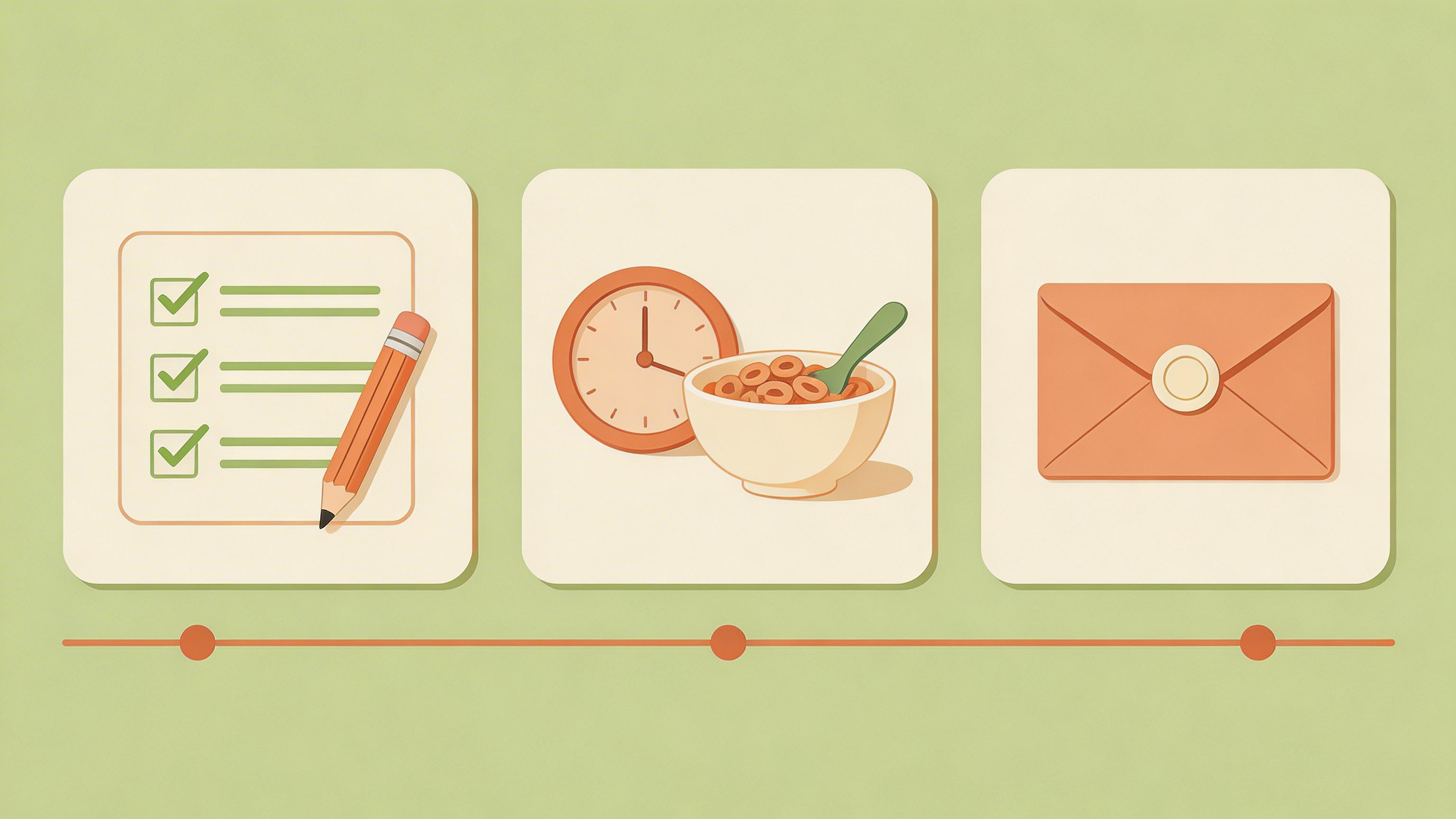
The Week Before: Practical Checklist
One week out, stop talking about the exam. This isn't denial — it's strategic.
Get the logistics right: - Print their admission slip. Put it somewhere visible. Check the time, location, and requirements twice. Know what time you're waking up (don't tell them yet). - Check what they're allowed to bring. Do they have pens, pencils, IC? Don't make them hunt for these three days before. - Sort out transport. Will you drive? Are they taking school transport? Are they walking? Decide now so there's no morning confusion.
Reset sleep. If they've been studying late, this week you're shifting bedtime earlier. By the night before the exam, they need to be sleeping normally — not "extra rest to prepare," just normal sleep. No "early night for the exam" — that's jinxing it. Just bedtime like any other night.
Feed them normally. Not specially healthy. Not "brain food." Normal. Whatever they usually eat. Their body knows this food. Don't surprise their stomach 48 hours before an exam.
Protect their social life. If they want to see a friend, they should. If they're stressed and want to stay home, that's okay too. But don't suddenly cut off their friends or their hobbies. One week isn't enough time to lose the thing that steadies them.
Exam Morning Routine (Make It Boring)
The morning of the exam, your job is to make everything so normal that they almost forget it's exam day.
Wake them up gently. No "big day today!" energy. Just your regular morning. Wake them. Open the curtains. No speeches. They already know what's happening.
Feed them breakfast. Whatever they usually eat. Not something "special." Their body needs fuel, not surprise. If they're too nervous to eat much, that's normal. Don't force it.
Get them dressed in clothes they feel normal in. Not their "best" clothes. Not a new uniform. Something they've worn a hundred times that feels like them.
Give them their admission slip, pens, IC — the stuff you already sorted. No last-minute hunting.
Drive or walk with them. Talk about something not school. Your work, the weather, something they find funny. Fill the time with normal.
When you drop them off, keep it short. Kiss, hug, "you've got this," and go. No lingering. No last-minute advice. They already know what to do.
Then — and this is the hard part — go about your day. Seriously. Go to work. Have coffee. Do something that shows your child (and yourself) that the world hasn't stopped.
When Results Come: The First Hour
Results day arrives. One of three things will happen: better than expected, as expected, or harder than expected.
Your reaction in the first hour will shape how your child processes this result for years.
If the result is good: Your child is already happy. Keep it in proportion. Celebrate with genuine warmth, not triumph. "I'm proud of your work" lands differently than "I knew you could do it" — one is about the effort, the other adds pressure for next time.
If the result is as expected: Acknowledge it. "This is what you've been working toward. Well done." Move on.
If the result is harder than expected: This is where most parents get it wrong.
Don't say things like: - "It's okay, you can do better next time" (implies this time was wrong) - "At least you have other schools" (minimises their disappointment) - "Many kids do worse" (compares them and teaches them their worth is relative) - "You didn't study hard enough" (you're now adding shame to disappointment)
Say this instead: - Silence, for a moment. Let them feel whatever they're feeling. - "That's disappointing. I can see why you're upset." - "This result doesn't change anything about you." - "Let's figure out what happens next."
That's it. You don't need to fix it in the first hour. You just need to sit with them in it.
The Conversation That Actually Matters
The real conversation comes later. Not immediately after results. Not at dinner when everyone's emotional. A few days later, when things are calmer.
"I want to understand what happened," is how you start.
Not: "You didn't prepare enough." (Blame) Not: "Why didn't you ask for help?" (Shame) Just: "Tell me what happened."
Listen. Actually listen. Don't plan your response while they're talking. Kids often know why they did worse. They know where they got stuck, which subject fell apart, what they wish they'd done. Your job is to hear it, not to fix it.
Then, together:
"What's the next step?" — could be DSA prep, could be regular secondary one, could be trying again next year, could be reassessing the whole plan. But it's a plan, not a punishment.
The point: your child's exam result is not a reflection of your parenting. It's not a referendum on their intelligence. It's not the defining moment of their life, even though it feels massive right now.
When secondary school goes well (and often it does), they'll have had good teachers and good fits. When it's hard, they'll have resilience and a parent who believed they could handle it. Both paths are okay.
FAQ
Should I let them see tutors during exam season? If they're already working with a tutor, fine — keep it going. Don't suddenly hire a new one. It adds pressure and tells them you don't think they're ready.
Is it okay to be anxious? Yes. It's not okay to show it. Be anxious privately. Call a friend. Journal. Exercise. But in front of your child, you're steady.
What if they want to study and I want them to rest? Let them study if that's what calms them. Some kids study as self-soothing. Others study as stress. You know your child — if it's making them worse, set a boundary. If it's making them feel in control, let it happen.
How do I help without adding pressure? Ask: "Do you want help?" instead of assuming. Offer: "I'm here if you need me" instead of: "Here's what you should do." Answer their actual questions instead of preparing for ones they haven't asked.
What if they don't get into the school they want? Read article #60 (coming soon). There's a whole guide for that conversation.
Related reading
- AI revision without killing the relationship (cross-pillar)
- week after PSLE (same-pillar)
- when your child does not get the school they wanted (same-pillar)