
How to Plan the Perfect Family Trip Using AI (Step by Step)
The Problem No One Talks About
Family trip planning sounds romantic. In reality, it's research hell. You're cross-referencing flights on four different browser tabs, asking yourself whether the hotel has air-con, Googling what to pack for a climate you've never been to, and your partner is sending you links to restaurants you'll probably never visit.
And that's before you've bought a single ticket.
Here's the good news: AI tools like ChatGPT and Claude can handle 80% of this without you needing to be an expert traveller. You don't need to know about flight schedules or whether Bali's humid in July. You just need to ask the right questions. And I'll walk you through exactly how.
This isn't about replacing your travel instincts. It's about outsourcing the boring stuff so you can actually plan something your family enjoys.
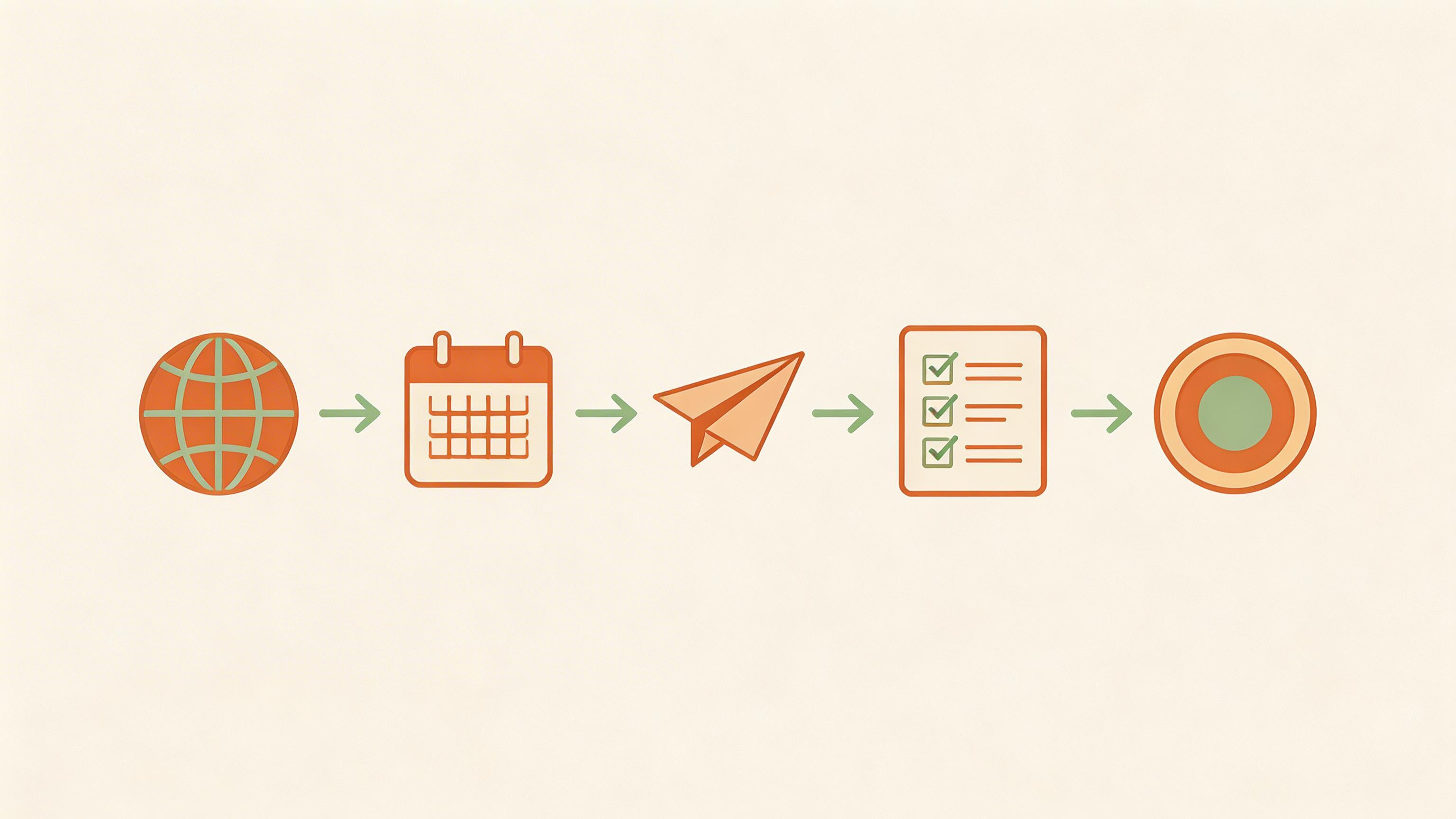
Step 1: Pick Your Destination (and Filter for Reality)
Start with what your family actually needs, not what the Instagram travel accounts tell you to want.
Your prompt: "I have two kids, ages 5 and 8. We're thinking about [destination] for two weeks in June. Give me three reasons why this is (or isn't) a good idea for families with young kids. What are the main challenges? What months are actually better?"
This does two things: it grounds your choice in reality, and it saves you from a trip planned around a sunset instead of your kids' needs.
ChatGPT or Claude will tell you if the destination has reliable electricity, what healthcare is like, whether the food is kid-friendly, and whether mid-June is actually good timing. It's the kind of advice a local friend would give you—and it stops you from learning these lessons the hard way.
What to do next: Screenshot the response. You'll need this when you're booking and packing.
Step 2: Build an Itinerary That Isn't Exhausting
Once you've picked your spot, you need a plan. But not the kind where you're visiting seven temples in three days and your 5-year-old is having a meltdown by day two.
Your prompt: "Build a 10-day itinerary for [destination] for a family with kids aged 5 and 8. Include: - 2-3 kid-friendly activities per day (not museums, actual experiences) - Mix of active days and rest days - Food recommendations that aren't adventurous - One "do-nothing day" Format it by day. Include travel time between locations."
This is where AI saves you real hours. You're not scrolling through blog posts written by childless 25-year-olds. You're getting a structure that assumes your kids need breaks, proper meals, and a reasonable bedtime.
The itinerary won't be perfect—it won't be, because it doesn't know your kids. But it's a template. You can swap out activities, adjust the pace, and actually make decisions from a real starting point instead of a blank spreadsheet.
Step 3: Kid-Filter Every Activity
Not every "great family activity" is great for your family. Your 8-year-old might love hiking. Your 5-year-old might hate it with the fire of a thousand suns.
Your prompt: "From this itinerary, tell me: - Which activities are genuinely fun for 5-year-olds, not just tolerable? - Which ones might bore the 8-year-old? - What's not age-appropriate? - What should we swap out or add? - Be honest—don't just say 'everything's fine.'"
This matters because a bad activity recommendation can derail a whole day. You're asking AI to think like someone who knows what actually engages kids, not just what travel websites recommend.
Step 4: Create a Packing List That Won't Take 3 Hours
This is the part where you usually end up with three times as many clothes as you need and still forget socks.
Your prompt: "Create a packing list for a family of four (two kids, ages 5 and 8) going to [destination] for 10 days in [month]. Include: - Daily clothes (we're okay with laundry halfway through) - Weather-specific items (if it rains, what do we actually need?) - Toiletries (what's available there, what should we bring?) - Activities we planned (what do we need for that?) - One special item per kid (what makes the trip feel exciting for them?) - Medications we should bring Create it as a packing checklist, not a paragraph."
Packing lists from AI are usually practical because they're not sentiment-driven. There's no "bring the nice outfit just in case." There's "you'll need sunscreen, a light rain jacket, and one nice outfit if you're eating somewhere fancy."
The checklist format means you can actually tick things off instead of packing semi-randomly.
Step 5: Figure Out a Budget (Without Guessing)
This is where parents often go wrong—they either overplan and spend double what they meant to, or they underestimate and stress about money the whole trip.
Your prompt: "Build a budget breakdown for a 10-day family trip to [destination] for four people (two kids). Budget: $[your number]. Include: - Accommodation - Flights (estimate) - Food (daily breakdown—breakfast, lunch, dinner, snacks) - Activities (with kid-appropriate options, cheap and paid) - Buffer for mistakes Show me what this budget actually allows us to do. Where can we save? Where should we spend?"
This is actually useful because it's not generic. It's built around your specific budget and your specific family size. If you've allocated $3,000 and AI shows you that's tight for accommodation plus activities, you know now instead of five days into the trip.
Step 6: Plan the Practical Logistics
The stuff that makes or breaks a family trip: flights, seat selection, timing, what to do on travel days.
Your prompt: "We're flying to [destination] on [date] with two kids, ages 5 and 8. What should we know? - Best time to fly (early morning, mid-day, evening)? - Seat strategy—should we book together or separately? - What to pack in carry-on for the kids? - How to handle the time difference? - What to do on the flight to keep them entertained (without screens)? - First day—should we rest or do an activity?"
This sounds simple, but getting the flight timing wrong or the seat strategy wrong can make a whole trip harder. You're asking someone (in this case, an AI that's read thousands of family travel accounts) who actually knows what works.
What AI Genuinely Can't Do (Be Honest About This)
AI will give you a solid itinerary, but it won't know that your 5-year-old gets carsick on winding roads, or that your partner has always wanted to see a specific temple, or that you want to stay in one place for three days because your mum lives nearby.
These are the things you layer in after AI does the heavy lifting.
It also won't pick your hotel. It'll give you criteria (good WiFi, close to activities, family-friendly) but you still need to read reviews and make the call.
The Time Maths
Here's why this matters: planning a two-week trip the old way—research, Pinterest, conflicting blog posts, multiple apps—takes about 10-15 hours of real work across a few weeks.
This prompt-by-prompt approach takes about 3-4 hours spread across a few days, and you get a better plan because it's structured around your family, not the internet's idea of "best."
You save roughly 10 hours and gain a trip that's actually built for your kids instead of built around your guilt about not doing enough.
The school holidays are six weeks long. You can spend a few hours in early June planning properly, or you can spend June 10th scrambling because nothing's booked and you're tired.
Your next step: Open ChatGPT or Claude right now. Write down the prompt for Step 1. You need a decision in the next week if you're booking flights. Start there.
Related reading
- AI holiday activities for kids (same-pillar)
- family game night with AI (same-pillar)
- June holiday trip in 2 hours (cluster)
Useful product links
- kids underwear collection (commercial)
- kids leggings collection (commercial)