
What Is TENCEL Modal? Why Singapore Parents Are Switching
The Quick Answer
TENCEL Modal is bamboo-derived fabric processed through a closed-loop system that makes it stronger, more durable, and more moisture-wicking than regular bamboo viscose. It's OEKO-TEX certified, naturally antibacterial, and exceptional in hot, humid climates. It costs more than bamboo or cotton, but Singapore parents are choosing it for kids with sensitive skin or those who sweat heavily because the difference in comfort and longevity is noticeable.
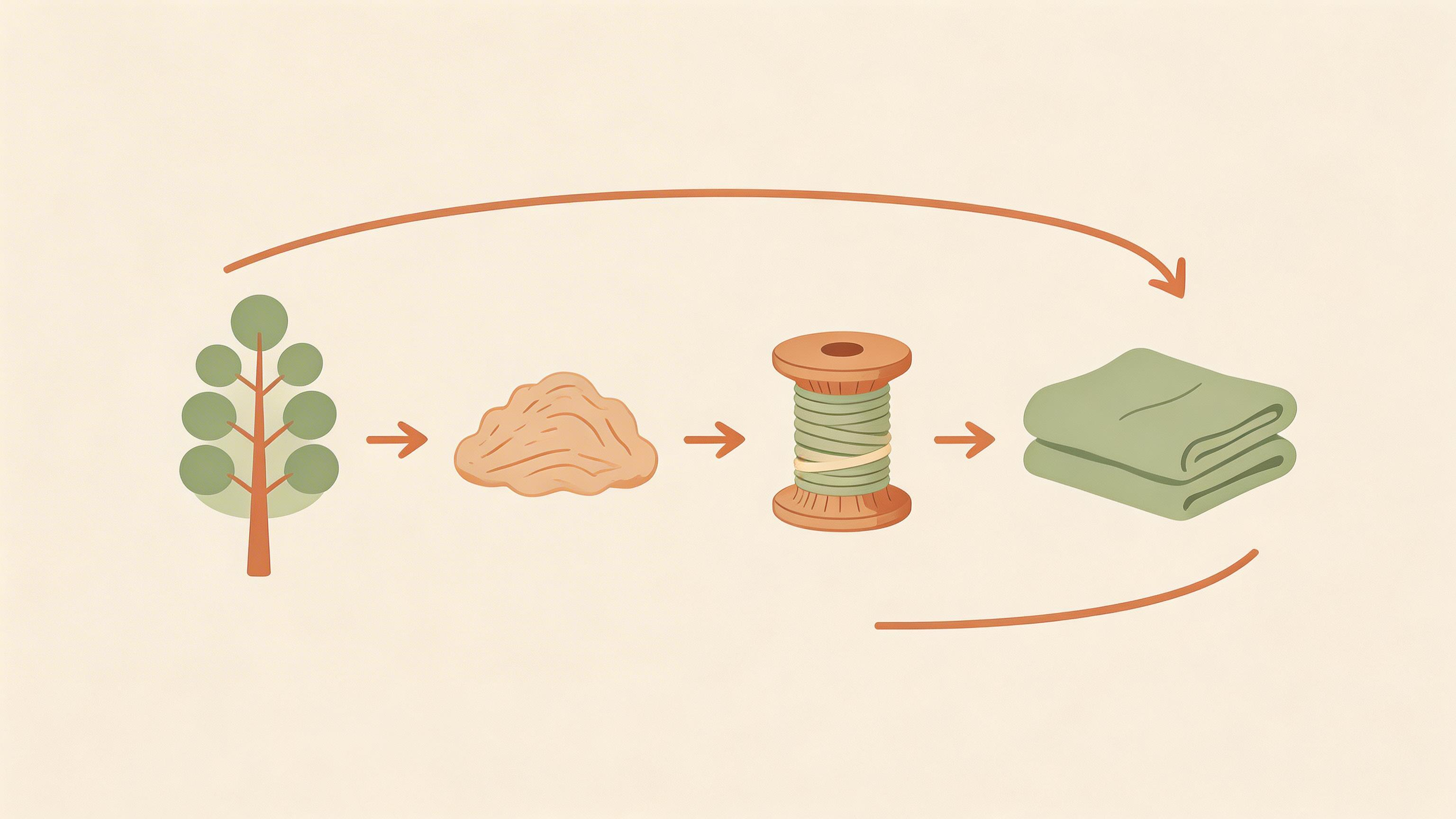
Where TENCEL Modal Comes From (And Why That Matters)
TENCEL Modal starts as bamboo—the same fast-growing plant used in regular bamboo viscose. The difference is in the production.
Regular bamboo viscose uses a viscose process that's been around for 100+ years. It's effective but involves solvents that aren't fully recovered. Some environmental cost.
TENCEL Modal is made by Lenzing AG, an Austrian company that developed a closed-loop production system. Here's what that means: bamboo is dissolved in solvents, spun into fibre, and the solvents are recycled through the system. 99% of solvents are recovered and reused. Only 1% is lost to the environment. The result is bamboo fibre that's stronger, cleaner, and more durable than regular bamboo viscose.
The fibre itself comes out with a slightly different structure—tighter, more uniform, more resistant to degradation. That's why TENCEL lasts longer and performs better, especially in humid, sweaty conditions.
OEKO-TEX Standard 100 certified: This matters for kids' skin. OEKO-TEX tests for harmful substances—heavy metals, formaldehyde, pesticides—at every stage of production. If it's OEKO-TEX certified, you're not buying mystery chemicals hidden in the fabric.
How TENCEL Feels vs. Bamboo vs. Cotton
This matters because how fabric feels affects whether your child will actually wear it.
TENCEL Modal touch: Exceptionally silky. Smoother than bamboo viscose, softer than cotton. It has a luxurious hand-feel that kids often prefer. It doesn't pill easily, so it stays smooth after many washes.
Bamboo viscose touch: Also silky, but slightly less so. Bamboo can feel slightly thicker, more substantial. Some kids prefer the heft. Bamboo can pill after many washes if the weave is loose.
Cotton touch: Crisp and familiar. Less soft initially, but softens with washing. Can feel stiff if it's a high thread count. Breathes well, but doesn't have the silky glide of bamboo or TENCEL.
In practice: If your child is picky about texture, TENCEL wins. If your child doesn't care (most don't), bamboo and TENCEL feel so similar that the difference won't register.
Why TENCEL Performs Better in Humidity
This is the core reason parents switch: TENCEL's moisture management in high humidity is unmatched.
Moisture absorption: TENCEL absorbs moisture just as fast as bamboo viscose—equally good. But here's where it differs: in humid air, TENCEL releases that moisture faster. The closed-loop processing creates a fibre structure that doesn't trap water vapour the way regular bamboo can.
Real-world scenario: Your child sweats through the night in Singapore. By 2am, their bamboo pyjamas are damp. They stay damp because humidity prevents evaporation. Sweat doesn't leave the surface of the fabric.
In TENCEL, that same sweat is absorbed but released to the air more readily. The pyjamas feel drier. The child sleeps better.
Why this matters for sensitive skin: Constant dampness irritates skin. Kids with eczema, heat rash, or general sensitivity suffer through bamboo (and especially cotton) in Singapore's climate. TENCEL keeps skin genuinely drier, reducing irritation and itching.
Temperature regulation: TENCEL regulates body temperature better than bamboo. It allows your child to feel cooler without making them cold. The effect is subtle but noticeable after sleeping in TENCEL a few nights.
TENCEL vs. Bamboo: An Honest Comparison
| Aspect | Bamboo Viscose | TENCEL Modal | |---|---|---| | Moisture absorption | Excellent | Excellent | | Moisture release in humidity | Good | Excellent | | Durability (wash cycles) | 50-75 washes before decline | 100+ washes with minimal decline | | Pilling resistance | Moderate (depends on weave) | Excellent | | Temperature regulation | Good | Very good | | Antibacterial properties | Yes (bamboo Kun) | Yes, similar | | OEKO-TEX certified | Often, not always | Typically yes | | Softness | Soft | Very soft | | Cost per item | $ | $$$ | | Worth it for Singapore humidity | Yes | Yes, if budget allows | | Best use case | Good general option | Sensitive skin or heavy sweaters |
When TENCEL Is Worth the Cost
TENCEL Modal costs 40-60% more than bamboo and 2-3x more than cotton. That's real money. Here's when the investment makes sense:
Your child has sensitive skin: If eczema, heat rash, or general sensitivity is an issue, the faster moisture-wicking pays for itself in reduced irritation and fewer sleepless nights.
Your child sweats heavily: Some kids sweat more than others due to metabolism or how their bodies regulate heat. If yours is one of them, the superior moisture management reduces night wake-ups.
Longevity matters to you: If you plan to reuse pyjamas for younger siblings or hand them down, TENCEL's durability (100+ wash cycles vs. 50-75 for bamboo) adds real value. You're not replacing them as often.
Budget allows: If cost isn't a constraint, TENCEL is objectively better in Singapore's climate. It outperforms bamboo viscose in every humidity-related metric.
Your child is particular about texture: If they hate the feel of cotton but tolerate bamboo, they'll probably love TENCEL's silkier hand-feel.
When Bamboo Viscose Is the Right Choice
You don't need TENCEL if:
- Your child doesn't sweat heavily and sleeps well in standard fabrics
- You have a tight budget and need to make the most of each dollar
- Your child's skin isn't sensitive
- You're buying for short-term use (one year or less before outgrowing)
Bamboo viscose is genuinely excellent. It's a huge step up from cotton for Singapore, and it costs significantly less than TENCEL. Most parents do fine with bamboo.
Sustainability: The Closed-Loop Advantage
If you care about environmental impact, the closed-loop production matters.
Regular bamboo viscose: effective, but solvents aren't fully recovered. Environmental cost in processing.
TENCEL Modal: 99% solvent recovery means minimal environmental impact from production. Bamboo itself is a renewably harvested crop.
Trade-off: TENCEL costs more, partly because the closed-loop system is more expensive to operate. You're paying for the environmental benefit. It's worth knowing what you're buying.
OEKO-TEX certification on TENCEL means no harmful substances end up in the fabric or in your child's skin. That's a real safety advantage.
Care and Longevity
To get the most from TENCEL (or bamboo), follow these:
Washing: Cool to warm water, gentle cycle, standard detergent. Skip fabric softener (reduces breathability and moisture-wicking).
Drying: Air-dry when possible. Low-heat tumble drying is fine, but high heat damages the fibres.
Frequency: Wash every 2-3 days if your child sweats, or every 3-5 days if they don't.
Lifespan with proper care: TENCEL holds up for 18-24 months with regular rotation and proper washing. Bamboo typically lasts 12-18 months before you notice decline in moisture-wicking.
FAQ: Your Questions
Is TENCEL Modal made from bamboo? Yes. It starts as bamboo, but the processing (closed-loop, Lenzing AG method) is what makes it TENCEL. It's not the same as regular bamboo viscose.
Is TENCEL more sustainable than bamboo viscose? The processing is more sustainable (99% solvent recovery vs. partial recovery). Bamboo itself is a renewable crop in both cases. Overall, TENCEL has a smaller environmental footprint.
Can I wash TENCEL with regular detergent? Yes. Standard detergent is fine. Just skip the fabric softener.
How long do TENCEL pyjamas actually last? With proper care and regular rotation (wearing, washing, drying), 18-24 months before you notice moisture-wicking decline. They don't "wear out"—they just perform less well over time.
Will my child feel a difference between bamboo and TENCEL? Most kids won't notice after the first few nights. The main difference is that TENCEL pyjamas stay drier in humidity, which improves sleep quality without the child being consciously aware of it. Adults notice the softness more than kids do.
Is TENCEL hypoallergenic? OEKO-TEX certification means no harmful substances. It's gentler on sensitive skin than many fabrics, but "hypoallergenic" is marketing—nothing is truly hypoallergenic. If your child has severe allergies, test a small piece first.
Can I bleach TENCEL? No. Bleach damages the fibres. Use oxygen-based stain removers instead.
What to Shop For
SimplyLife's TENCEL Modal collection is made from Lenzing TENCEL, OEKO-TEX certified, and designed for Singapore's heat and humidity. The construction prioritises moisture-wicking and durability, and the pieces are available in a range of sizes from newborn to kids.
Related reading
- bamboo vs TENCEL vs cotton (same-pillar)
- best fabrics for kids pyjamas (same-pillar)
- what bamboo clothing actually feels like (same-pillar)
Useful product links
- TENCEL Modal collection (commercial)