
What My Kid Taught Me About Learning
My daughter learned to walk one afternoon in July. Not gradually. Not after weeks of practice. One moment she was tentative, palm-pressed against the coffee table. The next, she let go. Three steps across our living room. Then she sat down, hard.
She didn't cry. She didn't celebrate. She just... sat. Completely unbothered that she'd just done something that, three months earlier, would have seemed impossible.
I realised I was the only one amazed.
This is what kids do — they show us what learning actually looks like when you strip away the performance.
You Don't Learn by Trying Harder
My son's reading clicked when he stopped trying. He'd been in that phase where the effort was visible — tongue between his teeth, sounding out every word, exhausted by chapter books meant for fun. Then one afternoon, he asked for a different book. Faster. Longer. Still about dinosaurs, but grittier.
"I didn't know he could read like that," my partner said.
The skill had been building invisibly. The "trying harder" phase was just him being aware of the learning. Once it became automatic, it looked like natural ability.
That's not a tiny thing. We spend so much time with kids (and with ourselves) believing that learning is visible effort. That you're only making progress if you feel the strain.
My son's reading taught me that sometimes you need the awkward phase, but the actual learning is what happens when you stop noticing you're doing it.
Confidence Doesn't Come From Competence
When my daughter first rode her bike without stabilisers, she crashed into the kerb.
She got up, furious. Not with herself — with the kerb. As if it had personally betrayed her.
She climbed back on immediately. No moment of doubt, no "maybe I'm not ready." Just: the kerb was wrong, now let's fix this.
She crashed four more times that afternoon.
By that evening, she was riding past our front gate. Still wobbly. Still a bit reckless. But absolutely sure she could do it.
I've watched adults learn to swim, to code, to cook — and the ones who progress fastest aren't the confident ones. They're the ones who genuinely don't care if they look stupid. My daughter didn't believe in herself more than the wobbly kids who gave up. She just cared less about the crashing part.
Confidence isn't something you feel before you try. It's what you grow while you're failing, if you don't let yourself think too hard about it.
Some Things Take Time and Can't Be Rushed
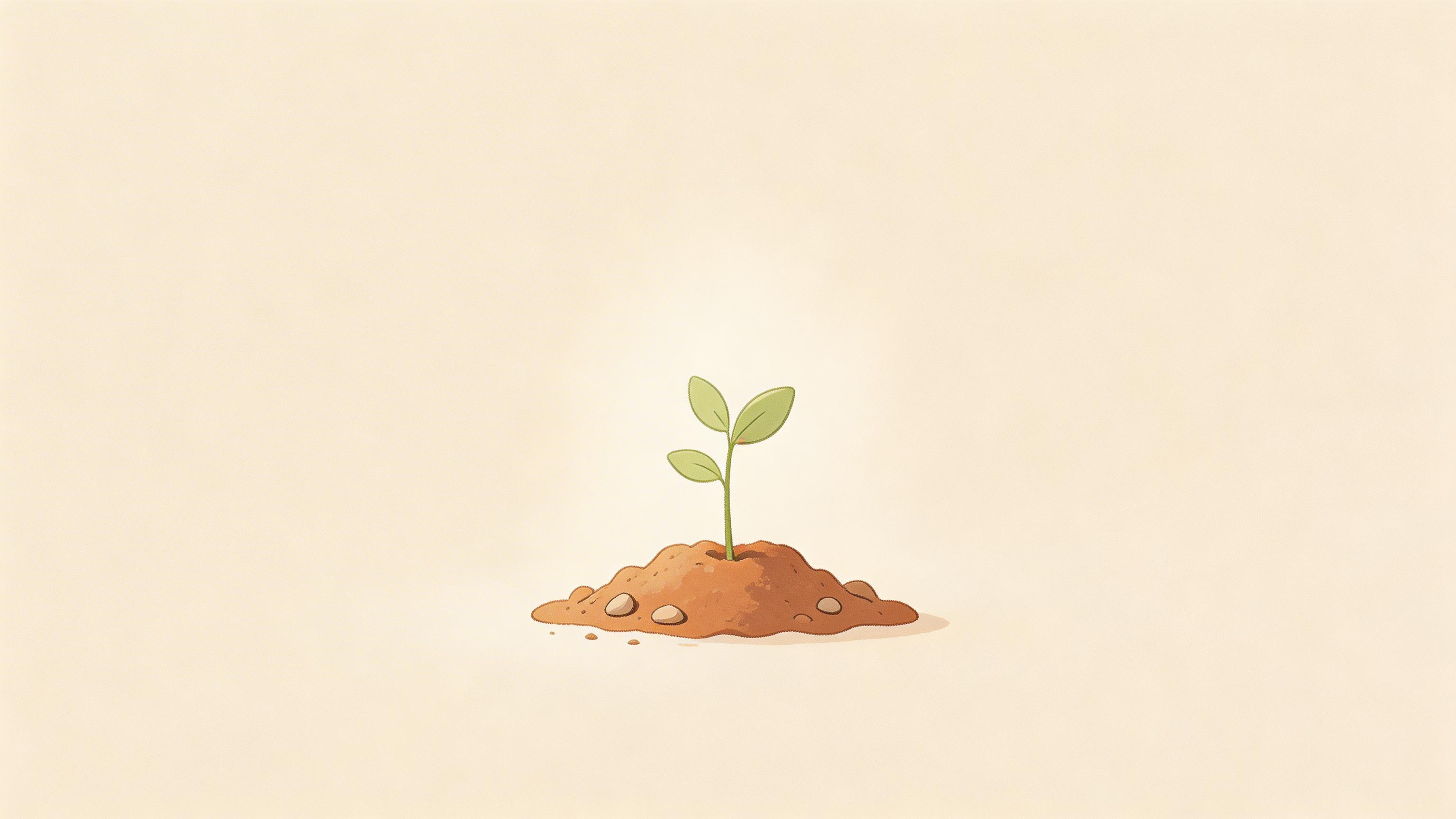
The other day, my son asked why plants grow slowly.
"Why can't they just be big already?" he said.
I started to explain photosynthesis, growth hormones, structural integrity. He stared at me like I was the one being silly.
"But why not?" he pressed.
Because they can't, I finally said. It just takes time.
He accepted this immediately. The plant is growing. It will get big. In the meantime, it's not big yet. This seemed entirely reasonable to him.
Later, I thought about how this would never satisfy an adult. We'd want the mechanism, the reason, the shortcut. We'd want to know if there was a way to speed it up.
My son just watered his plant and waited.
There are things in learning (and in parenting, and in life) that actually do just take time. Not because we're failing. Not because we need better strategies. Just because some things have a natural pace.
Kids accept this faster than we do.
The Thread Connecting It All
Kids aren't good at learning because they're clever or disciplined. They're good at learning because they haven't learned yet that learning is supposed to be hard.
They try things without a plan for success. They fail quietly and move on. They believe that growth takes as long as it takes. They don't narrate the process or treat it as performance art.
When we watch this, we see learning for what it actually is: not willpower or intellect or even effort in the way we typically think of it. Just... continuing to try things, without making it mean anything.
My kids have taught me more about how to learn than any system or framework. Not through what they say — they're kids, they don't say much worth quoting. But through what they do.
The calmness of learning by accident. The reality that competence emerges from playful failure. The knowledge that some things take time, and that's just how it is.
So if you're watching your kid learn something and they're not stressed about it — if they crash and get up and crash again without narrating their inadequacy — that's not because they're easy-going. That's because they're doing what learning actually looks like.
The rest of us just forgot.
Related reading
- the skills Singapore schools do not teach (cross-pillar)
- building resilience in kids (same-pillar)
- how I solved the Rubik's Cube with AI (cross-pillar)